Pressing & Steaming Equipment
Pressing is part of construction, not simply the final task. Heat, moisture, pressure and cooling help establish seam shapes and refine the way a garment sits.
Choose pressing equipment that suits your fabric and workspace, and learn how an iron and a garment steamer serve different purposes.
Press as You Construct
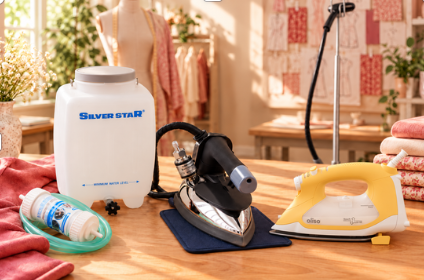
Pressing a seam before it becomes enclosed makes later stages easier to control. Work in sequence: settle the stitches, arrange the allowances as the construction requires and allow the area to cool before handling it again. Lift and place the iron thoughtfully instead of dragging the fabric out of shape.
What to look for
Test temperature, moisture and a press cloth on a scrap before pressing the garment.
Silver Star Gravity-Feed Iron
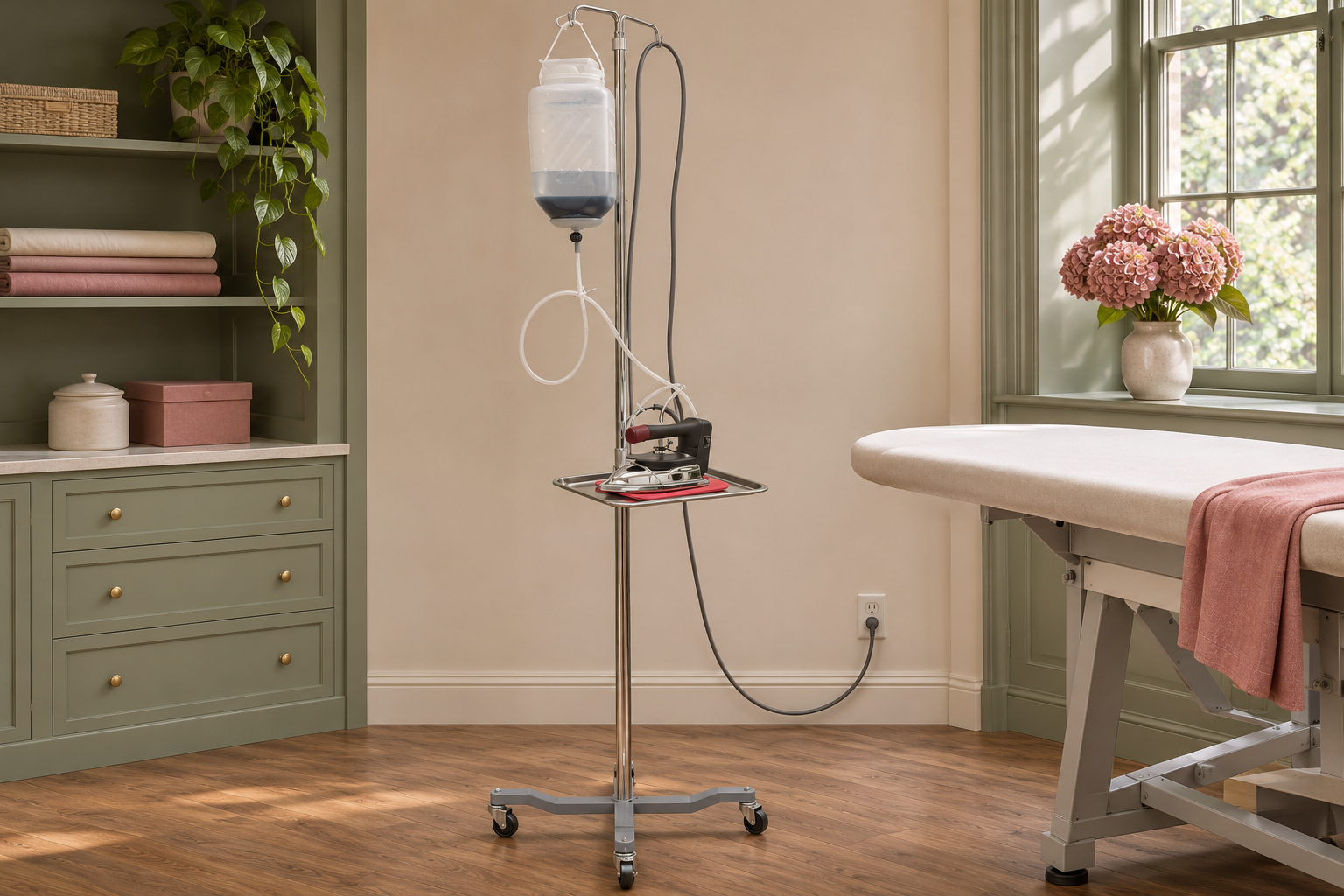
A gravity-feed iron uses a separate elevated water reservoir as part of its steam supply system. It can suit a dedicated pressing station where water supply, hose positioning and a stable iron rest are planned carefully. Setup and maintenance must follow the instructions for the specific model.
What to look for
Keep hoses clear of the work, use the specified water and make sure the reservoir and iron rest are securely positioned.
As an Amazon Associate I earn from qualifying purchases.
View on Amazon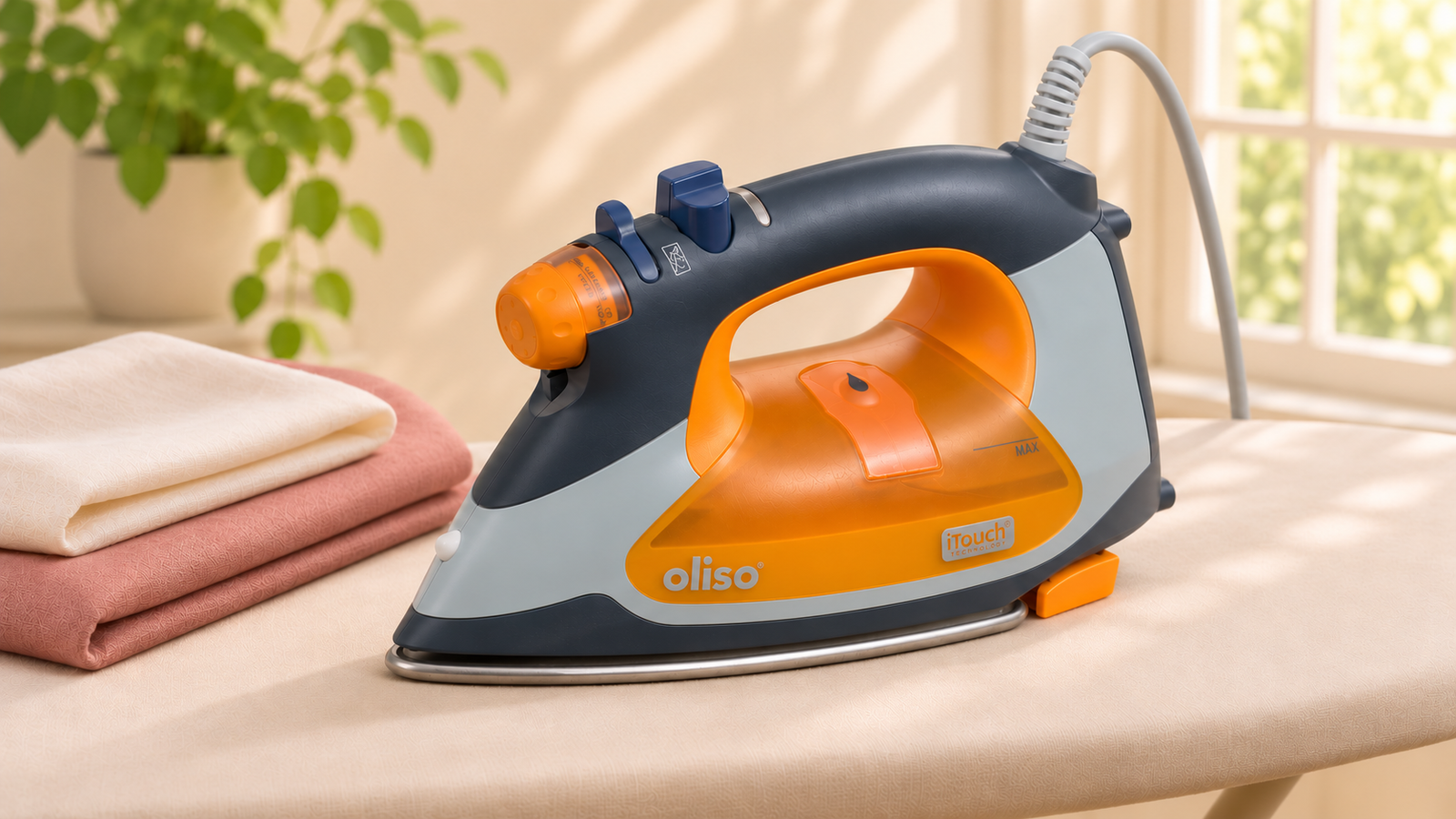
Oliso iTouch Iron
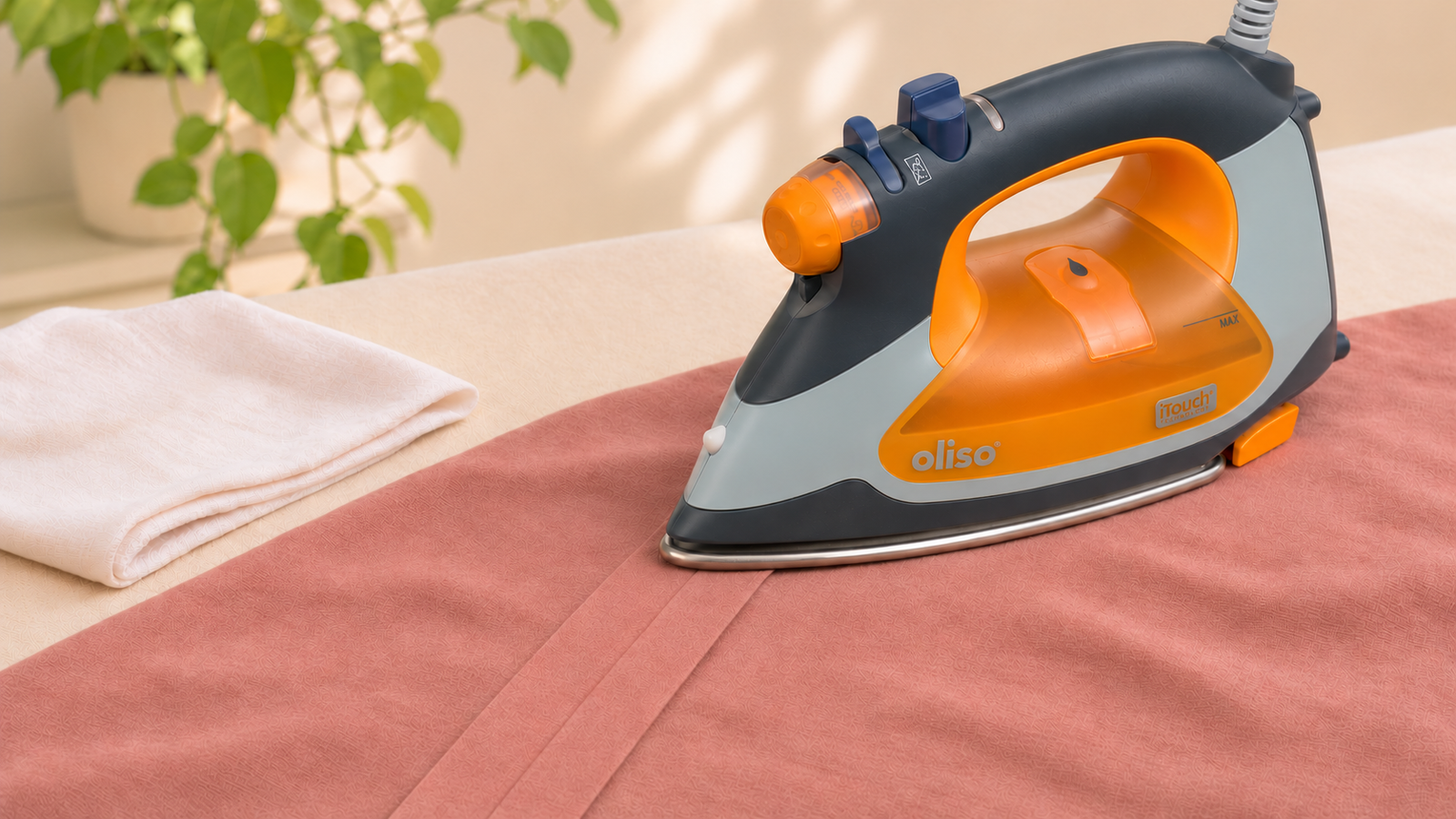
A domestic iron such as the Oliso iTouch shown here can be used for routine pressing during garment construction. Familiarity with its heat controls and operating instructions helps you work consistently across fabrics and layers. Do not rely on a single setting for an entire mixed-material project.
What to look for
Check the fabric response on a sample, including whether the surface develops shine or the layers shift under pressure.
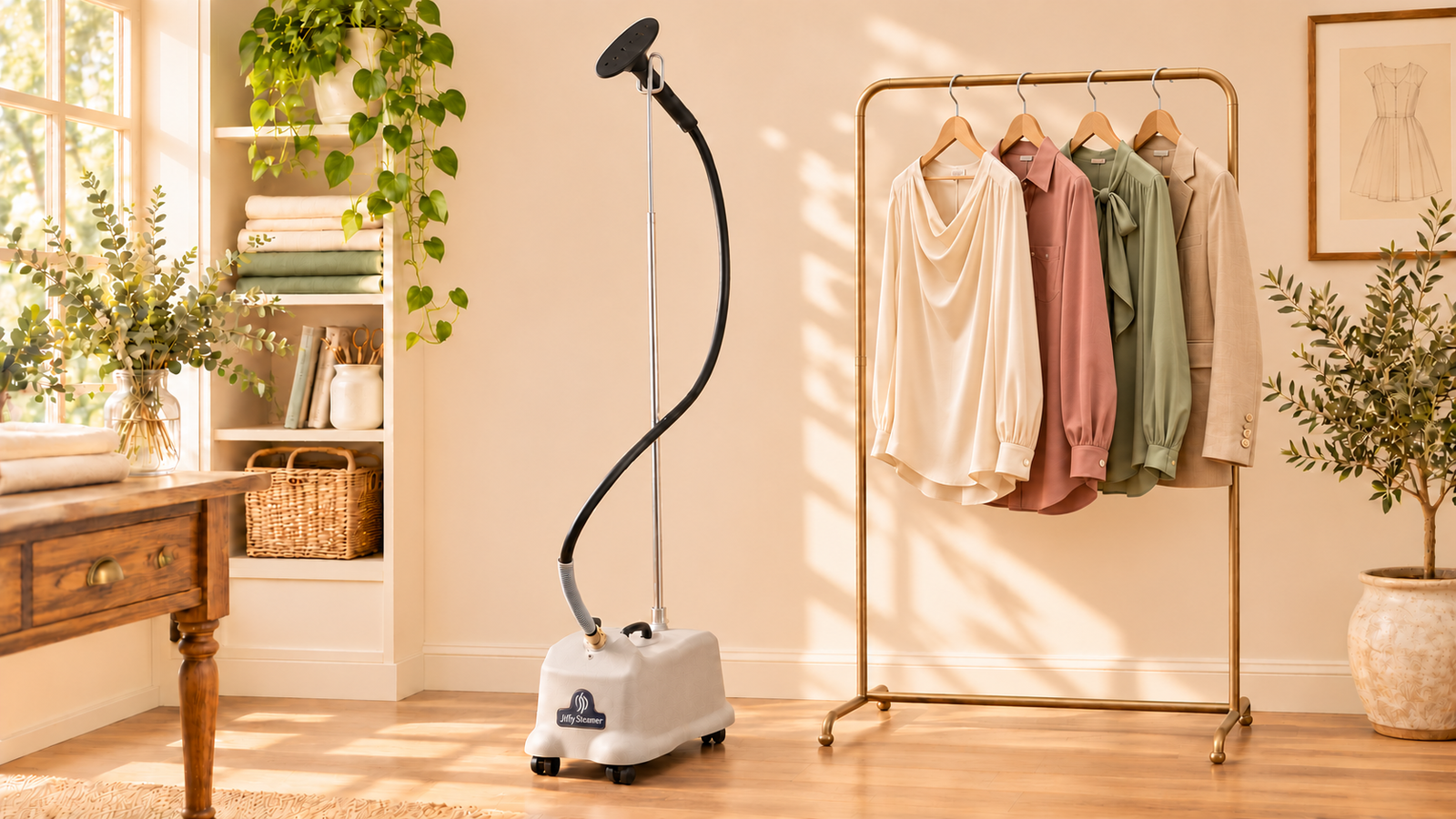
Jiffy Steamer
A garment steamer delivers steam without the same direct pressing action as an iron. It can be useful for refreshing and relaxing suitable hanging garments. It does not replace the supported pressure needed to establish a crisp seam, crease or tailored edge.
What to look for
Test the material first and keep hands clear of hot steam. Follow the model’s filling, handling and storage instructions.
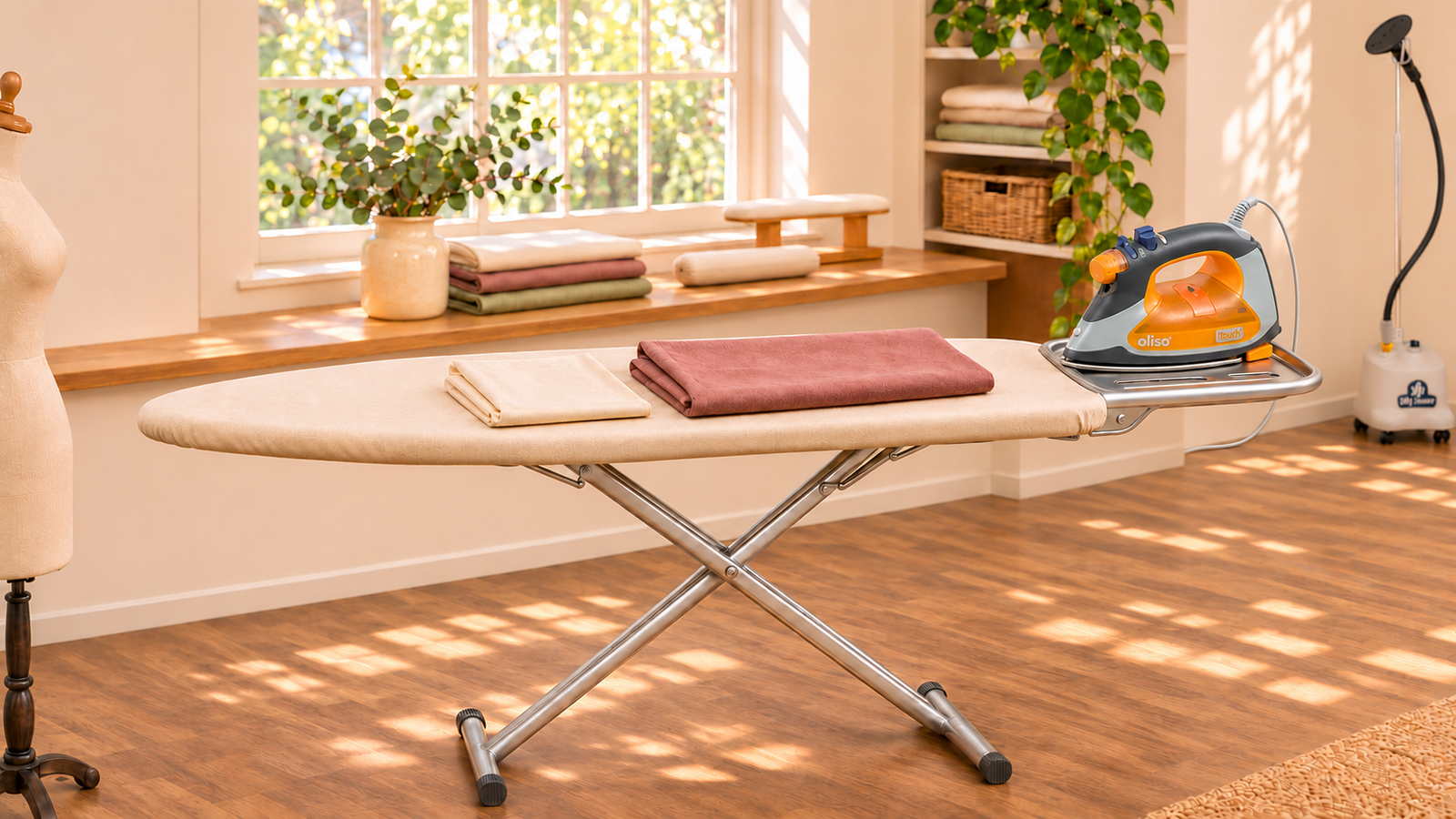
Build a Supported Pressing Station
A stable surface, sleeve board, tailor’s ham and seam roll can help support different garment shapes. Use only the heat, moisture and pressure the fabric needs. Let shaped sections cool in position before moving to the next operation.
What to look for
Pressing should support the intended shape. Avoid flattening areas that need to retain dimension.
Choose Equipment with Understanding
Build your collection around the work you do and the techniques you want to develop.
Back to The Sewing Shop