Sewing Machines
A sewing machine should support the work you want to do. Domestic and industrial machines can both produce beautiful garments, but they serve different purposes in the sewing room.
Understand the role of a versatile domestic machine and a dedicated industrial straight-stitch machine before choosing how to equip your workspace.
Domestic Sewing Machines
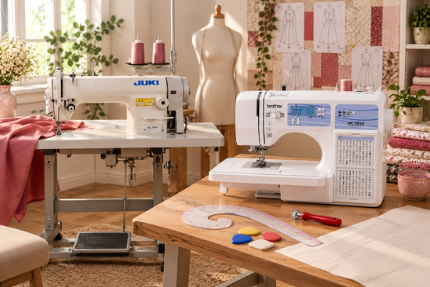
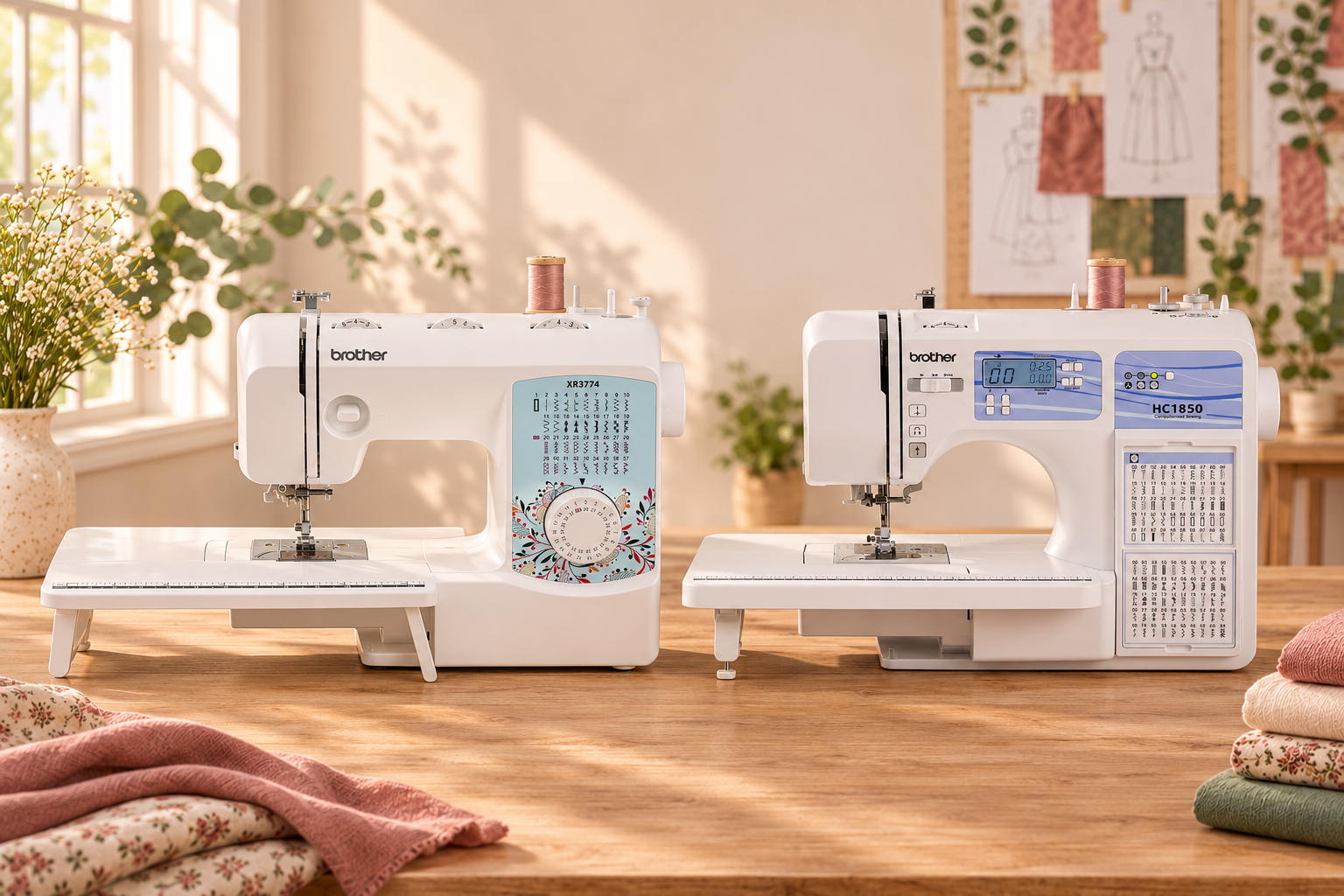
Domestic sewing machines bring multiple garment construction operations into one compact workspace. A mechanical machine, such as the Brother XR3774, uses manual dials to select stitches and adjust settings. A computerized machine, such as the Brother HC1850, uses electronic controls and a digital display to select stitches and adjust settings. Both can support everyday garment construction, including straight stitching, zigzag stitching and buttonholes. The choice depends on the controls you prefer and the techniques you use.
What to look for
Consider the stitches your projects require, the available workspace and how comfortably you can control the machine.
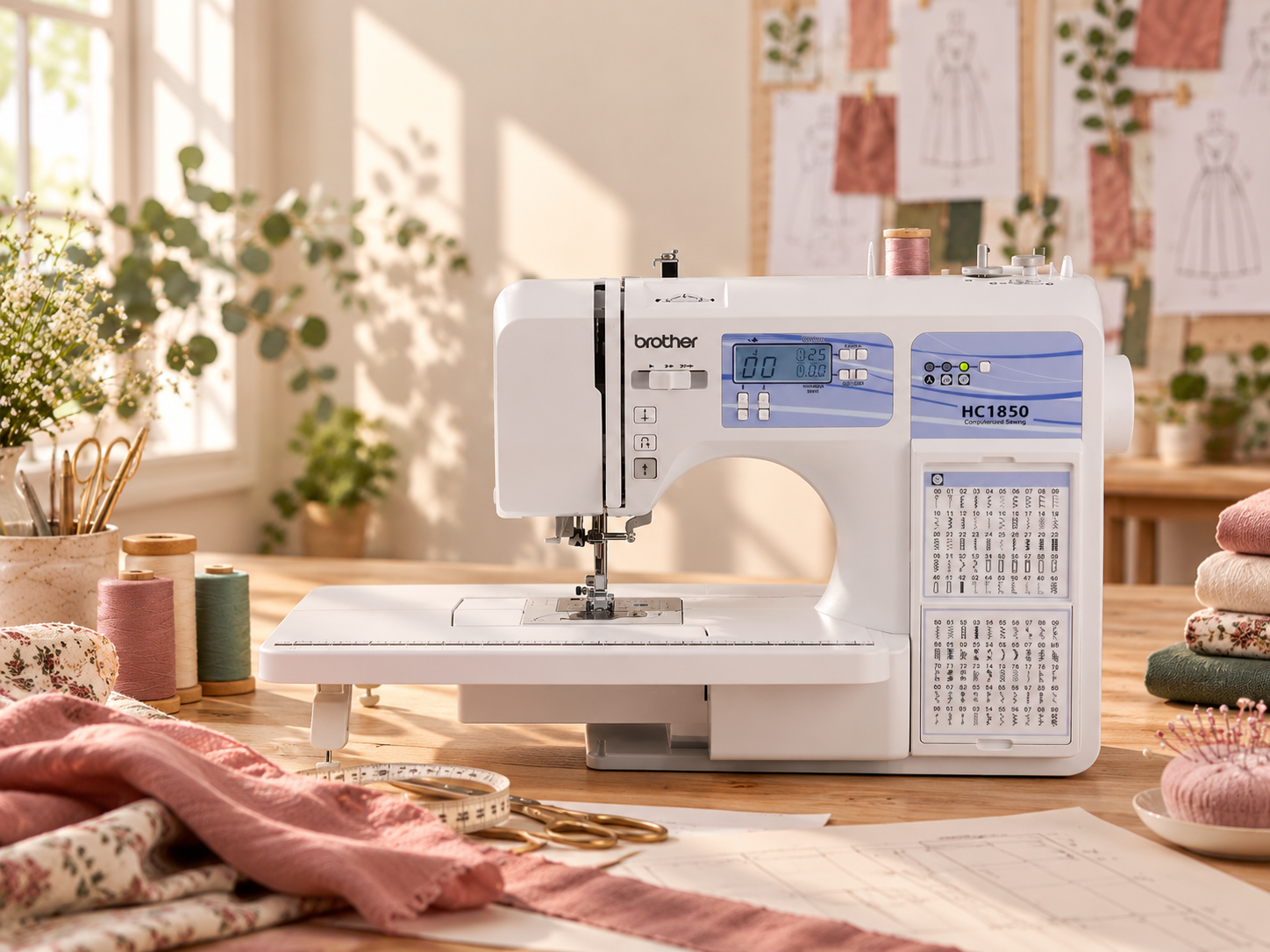
Brother HC1850
The Brother HC1850 is a computerized domestic sewing machine. Its stitch selection supports varied sewing tasks in a home studio, making it useful when a project moves between ordinary seams and details requiring different stitches. Learn the controls and consult the machine manual before changing needles, presser feet or settings.
What to look for
Prepare a sample using the same fabric layers, needle and thread planned for the garment. Check stitch formation on both sides before sewing the project.
As an Amazon Associate I earn from qualifying purchases.
View on Amazon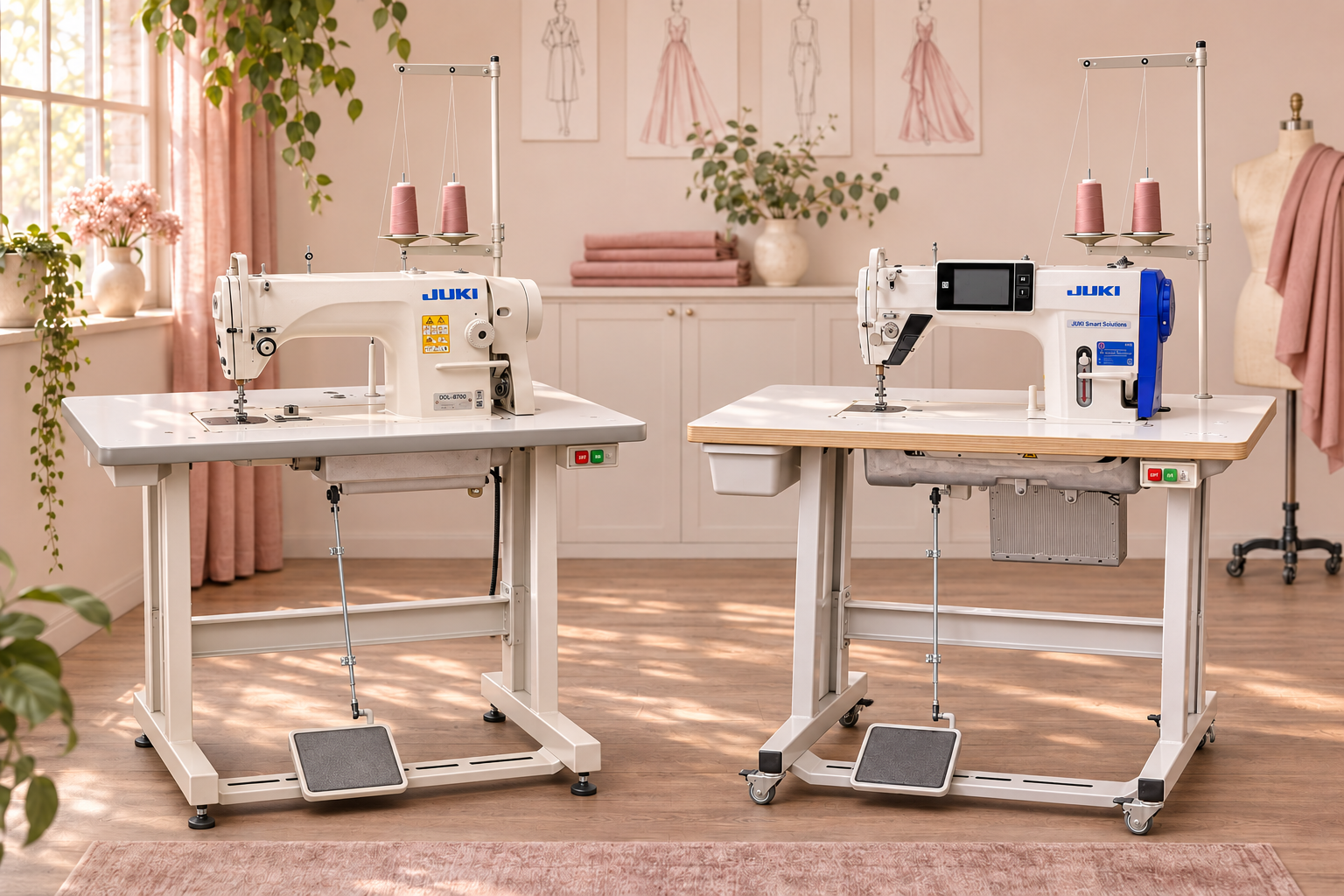
Industrial Sewing Machines
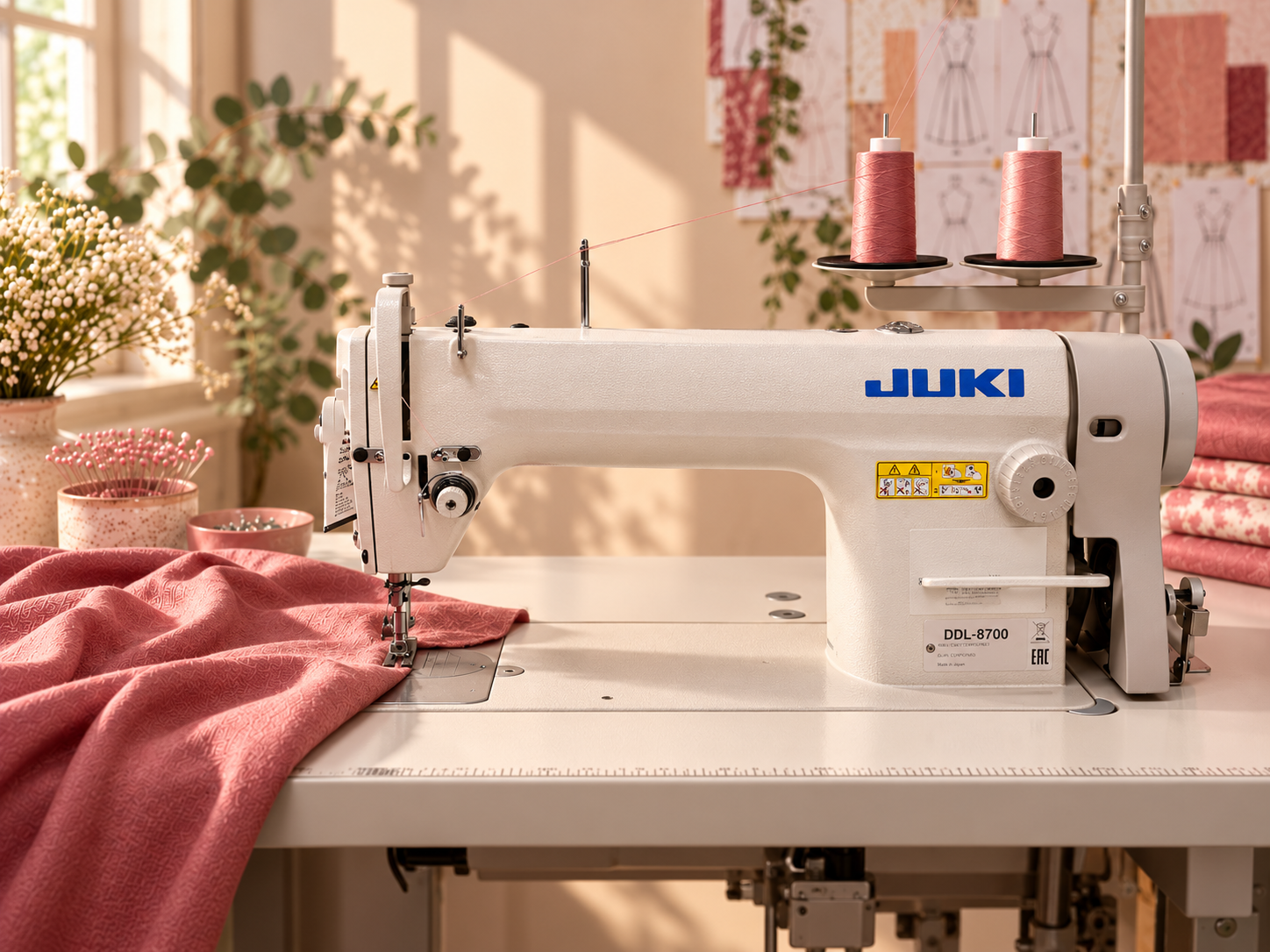
Industrial sewing machines are designed for specific operations. The conventional Juki DDL-8700 is a single-needle straight-stitch machine with mechanical adjustments, and it is the industrial machine I use in my own sewing studio. The Juki DDL-9000C series is a digital, direct-drive single-needle lockstitch system with electronically controlled settings and automatic thread trimming. Both are designed for repeated straight-stitch construction, but neither replaces the zigzag, buttonhole and other specialized functions of a domestic machine. Consider the table, motor, maintenance and space requirements when choosing a dedicated industrial workstation.
What to look for
Choose equipment for your actual materials and construction needs. Industrial does not automatically mean suitable for every fabric or every thickness.
Juki DDL-8700
The Juki DDL-8700 is a single-needle lockstitch machine used for straight-stitch construction. A dedicated straight-stitch workstation can be helpful when assembling garment components in an organized sequence. Buttonholes, overlocking and other specialist operations still require an appropriate separate method or machine.
What to look for
Practice starts, stops, corners and consistent seam allowances at a controlled pace before working on garment pieces.
Choosing a Practical Workflow
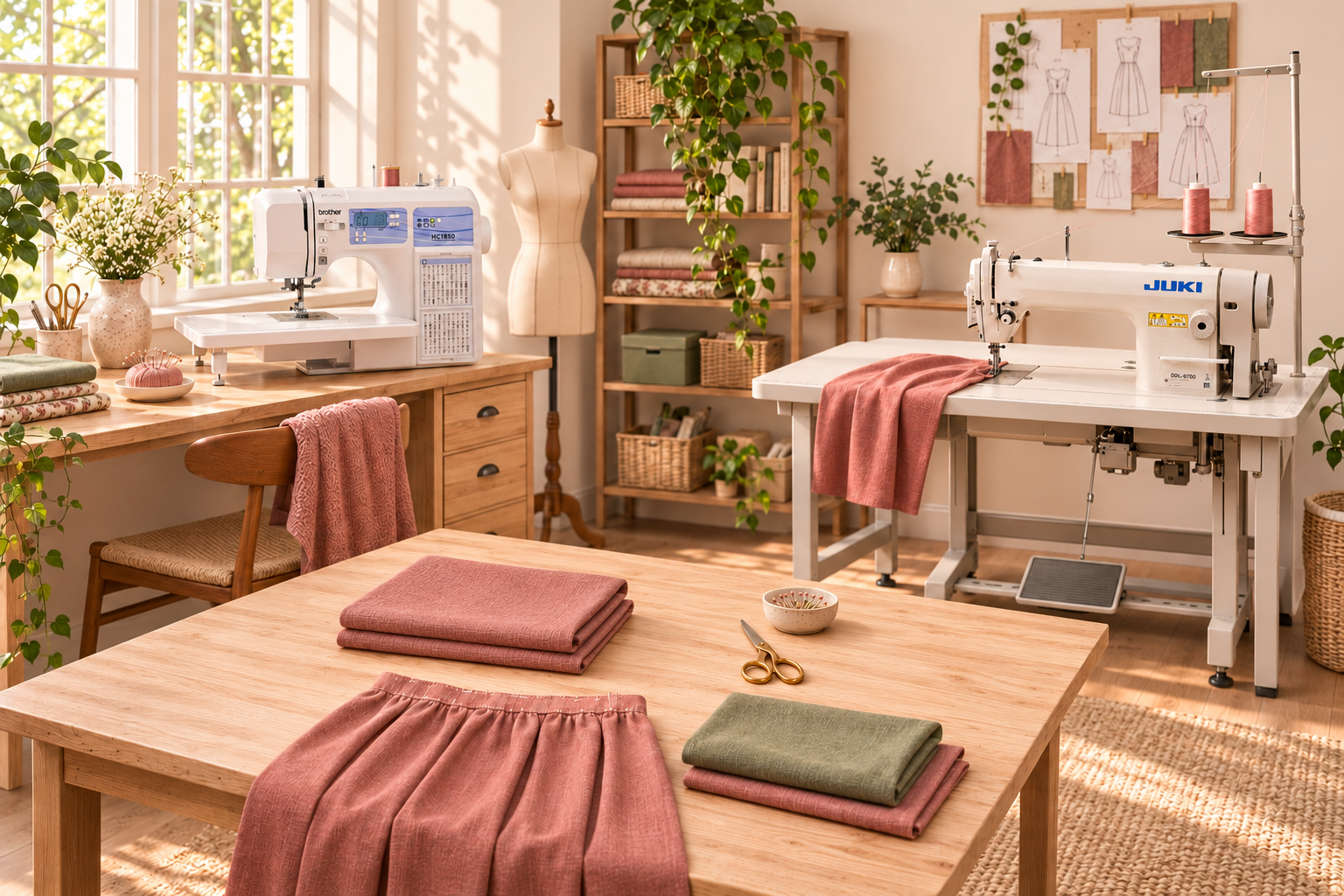
A domestic machine and an industrial straight-stitch machine can complement one another. Group similar operations, prepare components before stitching and press between construction stages. Reliable results depend on preparation, handling and suitable settings as well as the machine itself.
What to look for
Keep the manual available, maintain the machine as directed and change a damaged or unsuitable needle promptly.
Choose Equipment with Understanding
Build your collection around the work you do and the techniques you want to develop.
Back to The Sewing Shop