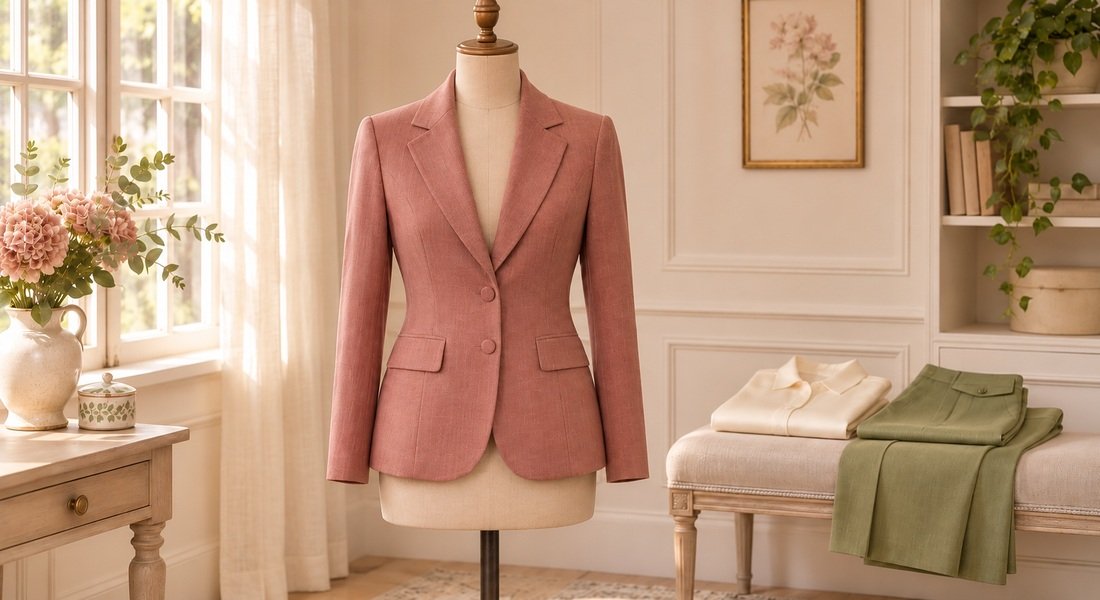
A garment may look appealing on a pattern envelope and still spend most of its time in the closet. Sometimes the fit is uncomfortable. Sometimes the style simply does not suit the way you dress. These are two different questions, and separating them can help you make better decisions before investing time and fabric.
Fit and style are not the same
Fit describes how a garment relates to the body: its balance, shaping, ease and freedom of movement. Style describes the intended appearance: the silhouette, proportions, fabric, color and details. A fitted jacket and an oversized jacket can both fit well when each behaves as designed.
Begin with the clothes you actually wear
Choose a garment from your wardrobe that you enjoy wearing. Notice where it sits on the body, how it moves and what makes it useful. Then identify the design features that appeal to you. Perhaps it is a straight trouser leg, a softly draped blouse or a jacket with a defined shoulder.
Record fit and style observations separately. A comfortable garment is a valuable reference, but its measurements are not automatically suitable for a different fabric or design.
Decide what to preserve and what to change
| Decision | Fit consideration | Style consideration |
|---|---|---|
| Trouser waist | Comfort at the intended wearing position | High, natural or lower waistline |
| Trouser leg | Movement and balance | Straight, tapered or wide silhouette |
| Blouse | Room to reach and move | Collar, sleeve shape and drape |
| Jacket | Comfort over intended layers | Length, lapel shape and structure |
| Skirt | Waist and hip comfort | Straight, A-line or fuller silhouette |
The two columns influence each other. Changing a silhouette may require different ease, fabric or construction. Do not assume a style change is simply an alteration to the side seams.
Use a reliable pattern foundation
A pattern that you have fitted and tested is a useful starting point for related designs. Keep a record of its fabric, finished measurements and changes. When introducing a new neckline, sleeve or trouser detail, assess the effect on the garment before cutting final fabric. A fitting sample can help when the change affects balance or movement.
For the mechanics of measuring and ease, refer to Why Proper Fit Begins with Accurate Measurements and The Art of a Perfect Fit: Understanding Ease in Garment Construction. This article is about applying those principles to wardrobe choices.
Plan around your life
Consider where you will wear the garment, what you will wear with it, and how you will care for it. A tailored piece may work with several existing outfits, while a special-occasion garment may serve a more specific purpose. Neither choice is wrong when it is intentional.
A wardrobe decision before cutting
Choose one proposed project and write down the occasion, the silhouette you want, the fabric behavior you need and the fitting points that deserve attention. Compare those choices with an existing garment you wear comfortably. Decide which qualities to carry forward and which you want to change.
The aim is not to reproduce the same garment indefinitely. It is to build a wardrobe with a dependable fit foundation and enough design freedom to express your individual style.
Back to The Sewing Journal