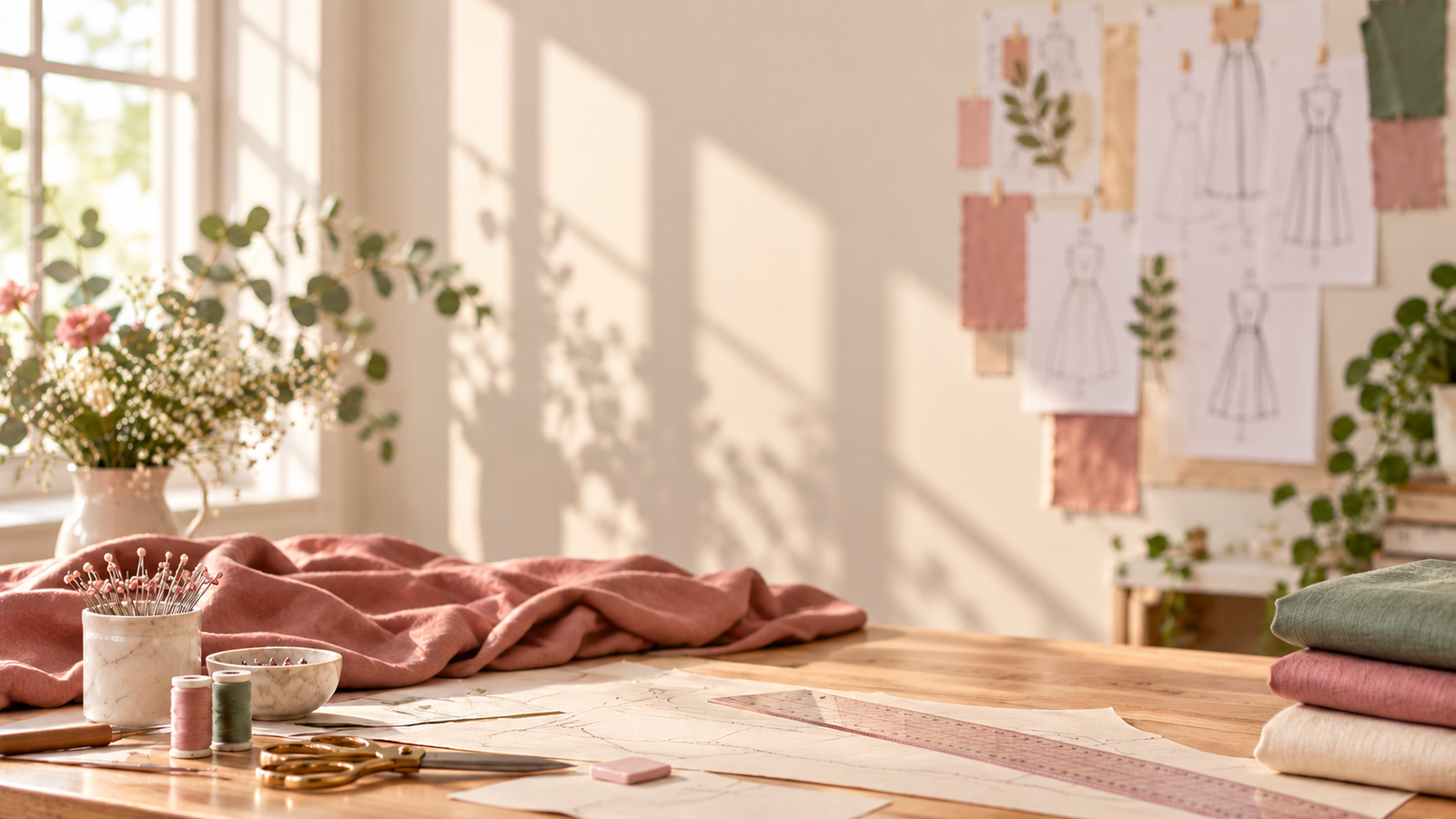
A well-fitting garment gives your body room to move, and your chosen silhouette room to take shape.
When you look at a beautifully fitted garment, it is tempting to think that its measurements must match the body exactly. In most woven garments, a little additional room is part of the fit. That room is called ease.
Ease influences how a garment feels when you sit, reach and walk. It also helps determine whether the garment looks close-fitting, softly shaped or deliberately generous. Understanding its purpose makes it easier to choose a pattern size, evaluate a fitting sample and decide which adjustments to make.
What is ease?
At a particular measurement line, ease is the difference between the finished garment measurement and the corresponding body measurement. Compare like with like: the garment’s finished hip measurement with the body’s hip measurement, for example.
Finished measurements exclude seam allowances. A flat pattern piece is not automatically a finished garment measurement: seams, darts, pleats, overlaps and other construction details must be accounted for.
A useful distinction
Wearing ease provides room for comfort and movement. Design ease creates the intended shape and style. Both can be present in the same garment.
Wearing ease: room for everyday movement
Your body changes shape as you move. A skirt that looks smooth while you stand still may feel restrictive when you sit. A blouse may need room across the back when you reach forward, even if the front appears comfortable.
In woven garments, wearing ease helps accommodate those changes. The amount and placement depend on the garment, fabric, body and intended use. A coat worn over a jacket has different requirements from a blouse worn close to the body.
- For skirts and trousers: check comfort when sitting and walking, as well as the position of the waist and hip.
- For blouses and dresses: check breathing room, reaching and the way the fabric rests over the bust and back.
- For jackets and coats: fit over the layers you expect to wear underneath.
There is no single allowance that produces the right fit for everyone. Use the pattern’s guidance as a starting point, then assess the garment on your own body.
Design ease: room that creates a silhouette
Design ease is the additional fullness used to create a particular look. Think of the difference between a neat pencil skirt and a softly gathered skirt, or between a fitted blouse and a flowing blouse. Those garments can be intended for the same body measurements while having very different finished measurements.
Removing fullness can change the design as well as the fit. Before taking in a garment, ask whether the extra room is uncomfortable excess or an intentional part of its shape. The pattern illustration, description and finished measurements can help you judge.
Ease also needs to be distributed thoughtfully. Adding room at the side seams may not resolve a need for more length over the bust or more shaping through the seat.
Read the pattern before choosing a size
Begin with current body measurements taken over the undergarments you plan to wear. Keep the tape level and comfortably against the body, without pulling it tight. Follow the pattern company’s measuring and size-selection instructions.
Then look for finished garment measurements on the envelope, instruction sheet or pattern tissue. Compare them with the body measurements used for that size. This helps you understand how much room the pattern includes before you make adjustments.
- Identify the pattern’s intended fit and recommended fabrics.
- Compare your measurements with its body measurement chart.
- Review the finished measurements at the relevant fitting points.
- Plan a fitting sample to confirm comfort, balance and shape.
A size label is a reference for that pattern system. It is not a judgment about your body, and it may differ from the size you buy in ready-to-wear clothing.
Let the fabric be part of the decision
A crisp cotton, a soft wool and a fluid crepe can behave differently in the same pattern. Weight, drape, stretch and recovery influence how the finished garment hangs and moves.
Choose a fitting fabric that reasonably resembles the project fabric. A very stiff sample cloth may give a misleading impression of a design intended for something soft and fluid. If your final fabric has stretch, assess that stretch in the direction it will be used and follow the pattern’s requirements.
Some stretch garments use negative ease, meaning the finished garment is smaller than the body and relies on stretch to fit. This is a separate design decision; do not apply it to a woven pattern simply because the fabric has a little give.
Test the fit in motion
Try on your fitting sample with its closures secured and its main seams in place. Stand naturally rather than holding a special fitting posture. Look at the front, sides and back, then move as you would while wearing the garment.
Your fitting check
- Can you sit and breathe comfortably?
- Can you walk and reach without the garment pulling excessively?
- Do the waistline, side seams and other balance lines sit as intended?
- Does the garment hang smoothly without unwanted strain or collapsing fullness?
- Does its silhouette still resemble the design you chose?
Pulling, drag lines or loose folds are clues, rather than a diagnosis on their own. They may reflect the amount of ease, its placement, garment length, shaping or balance. Make one considered adjustment at a time and check the result again.
A small practice that builds understanding
Choose a woven garment you already find comfortable. Compare its finished measurements with your body measurements at the same levels. Notice where the garment has room and how that room supports its shape.
Use the comparison as a personal reference, rather than a formula for every future project. Record the fabric, silhouette and what you like about the fit. Over time, those notes become a useful guide to your own preferences.
Fit is comfort, balance and intention
The goal is not to remove every fold or make the garment as close to the body as possible. It is to create the shape you intended with enough room to wear it comfortably.
Start with careful measurements, understand the pattern’s design and give yourself permission to test. Each fitting sample helps you make more confident decisions, and brings you closer to garments that feel as considered as they look.