A pair of tailored trousers is more than two legs joined at the center. Every component has a purpose, from the waistband that supports the garment to the hem that finishes its silhouette. Understanding how those parts work together makes it easier to select a pattern, prepare the materials and recognize construction problems before they become difficult to correct.
This is Part 1 of the Tailored Trouser Series. We will look at the garment from the front, back and inside.
The three areas that work together
Waist: The waistband should remain at its intended wearing position without uncomfortable pressure.
Body: The abdomen, hips, seat and thighs need room and shaping appropriate to the design.
Leg: The grainline, seams and hem width work together to create the intended silhouette.
The front of the trouser
Waistband and closure
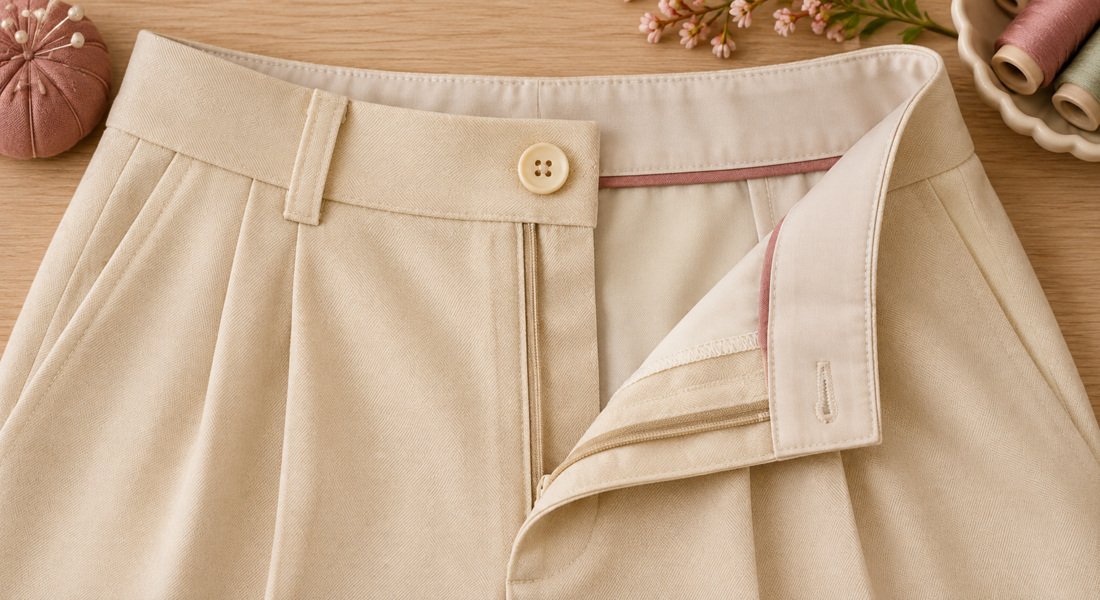
The waistband may be straight or contoured. Its inner support helps maintain its shape. A button or hook-and-bar may secure an extension beyond the fly. Belt loops are optional and should be positioned and secured according to the design.
Fly front
A fly conceals the zipper beneath an overlap at center front. Inside, a fly extension or facing supports the opening, while a shield, when included, separates the zipper from the body. The lower end of the opening is reinforced according to the pattern. The curved topstitching usually follows the shape of the fly facing, not the zipper teeth themselves.
Pleats, darts and pockets
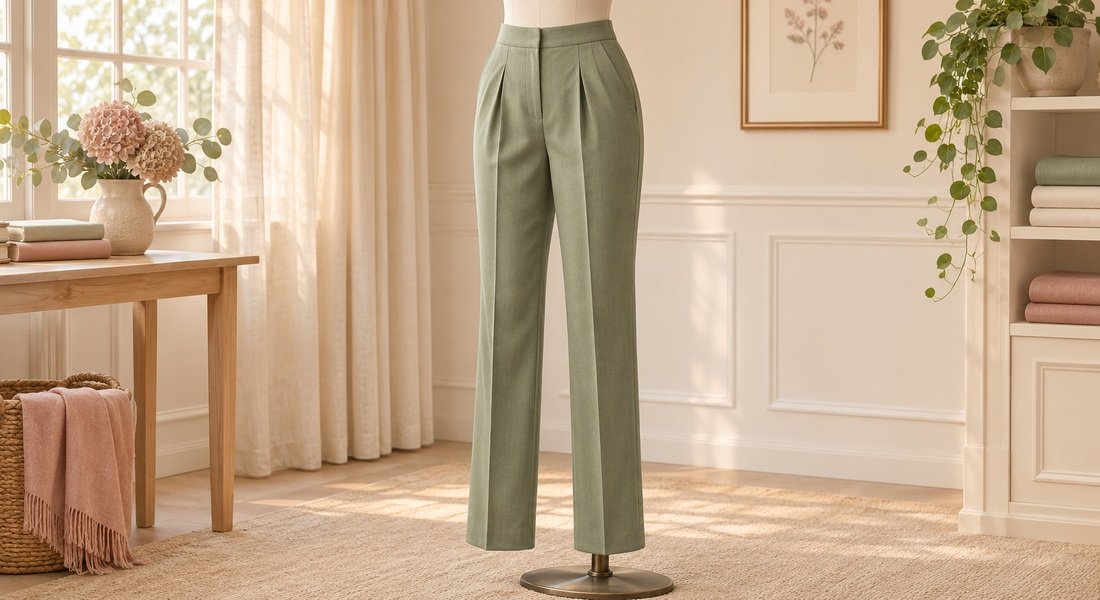
Pleats release controlled fullness below the waist. Darts remove a wedge of fabric to create shaping. A flat-front trouser may use side-seam shaping alone or incorporate darts, depending on the pattern. Slanted pockets are common; their bags must lie smoothly and their openings should not distort. On-seam and welt pockets are other possibilities.
The back of the trouser
The center-back seam shapes the waist and seat. Back darts help distribute the difference between waist and hip measurements. Some tailoring patterns provide extra seam allowance at center back for alterations. Preserve it where the design permits.
The front and back rise and the crotch curve influence how the trousers sit on the body. Check them while seated as well as standing. Back welt pockets are optional and require accurate placement and reinforcement before their openings are cut.
A fit map for trousers
| Area | What to observe |
|---|---|
| Waist and high hip | Position, comfort and whether the upper edge gaps |
| Abdomen and full hip | Room, pocket distortion and horizontal pulling |
| Seat and rise | Coverage and comfort during sitting |
| Crotch and upper thigh | Movement, seam position and drag lines |
| Knee, calf and hem | Leg balance, intended width and freedom of movement |
A fitting sample is useful when the pattern is unfamiliar. A circumference alone cannot tell you whether the length and distribution of fullness are appropriate.
Inside the trouser
Interfacing supports selected areas such as the waistband and pocket openings. Pocket bags can be anchored at seams or the waist where the design allows. Lining may extend to the knee or full length, or be omitted. Select seam finishes appropriate to the cloth and preserve fitting allowances until the fit is confirmed.
The leg and hem
Straight, tapered and wide legs all rely on accurate cutting and balanced seams. A pressed crease, if the design includes one, follows the intended crease line. A plain hem, cuff or faced hem changes the weight and appearance of the leg. Check the finished length with the shoes you intend to wear.
Before you begin
Confirm the pattern features and fabric suitability.
Gather compatible interfacing, pocketing, lining and closures.
Plan a fitting checkpoint before irreversible trimming.
Identify flat-access operations, including pockets and fly preparation.
Allow time to press and inspect each stage.
Continue with The Waistband: The Anchor of a Woman’s Tailored Trouser, Part 2 of the series.
Back to The Sewing Journal