
Blog
The Right Sewing Machine Needle Starts With Your Machine — Not Your Fabric
No Comments
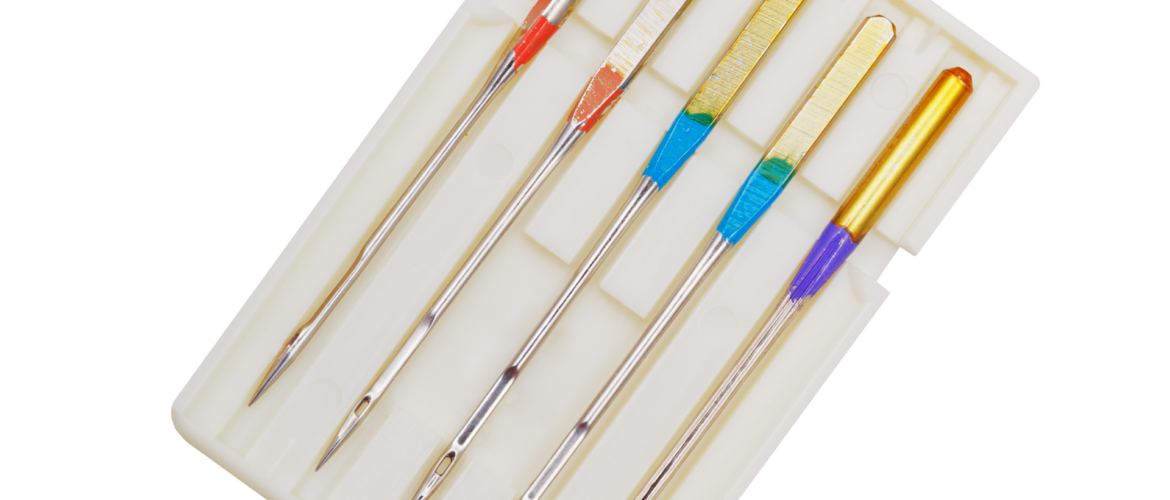
Most needle guides jump straight to fabric charts. This one doesn’t. Because if you put the wrong needle system in your machine, no amount of fabric knowledge will save you.
Let’s start where you should always start — with your machine.
Step One: Know What Needle System Your Machine Uses
Every sewing machine is built around a specific needle system. Use the wrong system and you’ll get skipped stitches, broken needles, damaged fabric, or worse — a damaged machine.
If you bought your machine new, this is easy. Your manual spells out exactly which needle system and brands are recommended. That information is there for a reason — use it. I follow the manufacturer’s recommendation on every single machine I own, and I own several.
If you bought a used machine, you may have no manual at all. In that case:
- Look up the make and model online — most manufacturers have downloadable manuals
- Take a needle from the machine to your local sewing shop and ask them to match it
- Or bring the machine model number and ask for the recommended needle system
Don’t guess. A needle that looks right isn’t necessarily right.
One Thing I Never Do: Use Generic Needles
I don’t use generic sewing machine needles on any of my machines. Not on my Bernina 475, not on my Kenmore, not on my sergers, and absolutely not on my Juki industrial.
Generic needles are inconsistent — the tip quality, the eye finish, the shaft strength. You get what you pay for, and with a machine that costs hundreds or thousands of dollars, this is not where you cut corners. I use Schmetz across the board. Organ is a good alternative. Klasse as well. Stick with a name you can trust.
Domestic vs. Industrial: Your Needles Are NOT Interchangeable
This is where things get important — especially if you’re running more than one machine like I do.
Home machines — my Bernina 475 and Kenmore both use the standard 130/705H needle system. This is the most common system for domestic sewing machines and what most quality needle brands package for.
Sergers are different. My Brother 3/4 serger and Singer 5-thread serger each have their own recommended needles — and they’re not the same as my sewing machine needles. I keep them in completely separate storage so there’s no mix-up. Check your manual. Putting the wrong needle in your serger is asking for trouble.
Industrial machines are a completely different world. My Juki DDL-8700 uses a DBx1 industrial needle system. These have a completely round shank, unlike the flat-backed needles for my Bernina, and are built to handle the high speed and tension of an industrial machine.
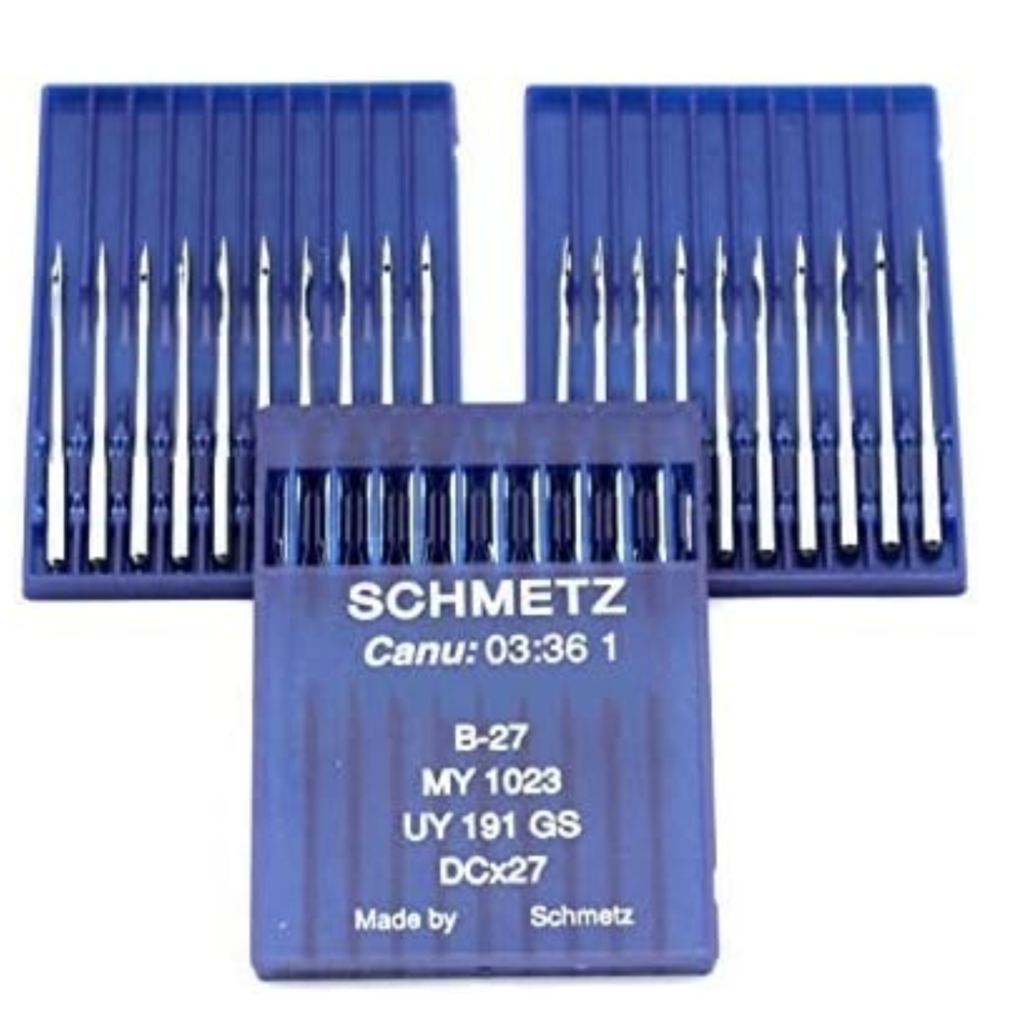
→ Schmetz 130/705H Home Machine Needles → Organ DBx1 Industrial Needles for Juki → Schmetz Serger Needles
Step Two: Choose Your Needle Type Based on Fabric
Once you know you have the right needle system for your machine, then — and only then — does fabric type come into play.
Woven Fabrics: Universal Needle
For most wovens — cotton, linen, wool, silk — a Universal needle handles the job. It’s what I reach for first on my Bernina when I’m working with natural fiber wovens. The slightly rounded tip works across a wide range of everyday fabrics without drama.
→ Schmetz Universal Needles
Knits and Jersey: Ballpoint (Jersey) Needle
A Universal needle has a sharp point that pierces and cuts the loops in a knit fabric, causing snags, runs, and holes. I switched to a Ballpoint needle — the rounded tip glides between the loops instead of through them — and the difference is immediate.
If you’re sewing jersey and getting any of those problems, switch your needle before you change anything else. Nine times out of ten, that’s all it takes.
→ Schmetz Jersey Needles
Lycra, Spandex, Swimwear: Stretch Needle
Highly elastic fabrics need a Stretch needle. It has both a ballpoint tip and a special scarf above the eye that prevents skipped stitches on very stretchy knits. I reach for this on my Singer serger when I’m working with swimwear or stretch lace.
Tip: If your Jersey needle is skipping stitches, try a Stretch needle. It solves the problem most of the time, especially on lightweight or slinky knits.
→ Schmetz Stretch Needles
Tightly Woven Fabrics, Silk, Taffeta: Microtex (Sharp) Needle
The Microtex needle has an extra-fine point that makes clean, nearly invisible perforations. I use this on silk charmeuse, taffeta, and tightly woven cottons where needle holes show. On fine silk especially, this is not a needle you want to substitute.
→ Schmetz Microtex Needles
Denim, Canvas, Heavy Layers: Denim (Jeans) Needle
Reinforced shaft, built to punch through thick fabrics and multiple seam layers without bending or breaking. For heavy coating fabrics and thick seam intersections, I’ll move this job to my Juki — but when I’m doing it on a domestic machine, the Denim needle is non-negotiable.
→ Schmetz Denim Needles
Leather and Suede: Leather Needle
A chisel-point tip cuts cleanly through leather without tearing. For lightweight or faux leather, a Universal often works — but for real medium to heavy leather, use the right needle. I learned that one the hard way.
→ Schmetz Leather Needles
Step Three: Match Your Needle Size to Fabric Weight
Needle size is about fabric weight — same rule applies across all needle types:
| Fabric Weight | Examples | Needle Size |
|---|---|---|
| Lightweight | Voile, batiste, silk, fine linen | 70/10 |
| Medium weight | Quilting cotton, linen, light wool | 80/12 |
| Heavy weight | Denim, canvas, coating, heavy linen | 90/14 |
Special Threads Need Special Needles
If you’re using anything other than standard thread, your needle needs to match. I don’t care how good the thread is — put it through the wrong needle and you’ll fight it the whole way.
Topstitching thread → Topstitch Needle — extra-large eye accommodates heavier decorative thread without shredding it. I use these on tailored jackets and coats where topstitching is meant to be seen.
Embroidery thread → Embroidery Needle — larger eye, smoother interior to reduce friction and thread breakage.
Metallic thread → Metallic Needle — specifically engineered for fragile metallic threads. If your metallic thread keeps snapping every few inches, this is the fix.
→ Schmetz Topstitch Needles → Schmetz Embroidery Needles → Schmetz Metallic Needles
Change Your Needle More Often Than You Think You Should
A dull needle causes more sewing problems than most people realize — skipped stitches, uneven tension, fabric damage. I change my needle every 6–8 hours of sewing time, or at the start of every new project. It’s the cheapest fix in your sewing room, and it’s one of the first things I check when something isn’t sewing right.
Disclosure: Some links in this post are affiliate links. If you purchase through them, I may earn a small commission at no extra cost to you. I only recommend products I use and trust.