News & Events
Womens Tailored Trousers: The Complete Anatomy Guide
No Comments
A Guide to the Parts of Women’s Dress Slacks
Womens tailored trousers are built from connected parts that affect fit, comfort, movement, and appearance. The waistband holds the garment in place, while the fly provides the opening. Pleats, darts, and seams shape the fabric around the body. In addition, pockets, lining, and interior finishes support daily wear. Together, the rise, crotch curve, and leg determine how the trousers feel when you stand, sit, and walk.
To start, this article introduces the main components of women’s tailored trousers, also called dress slacks. It is the starting point for the Tailored Trouser Series, where each feature will be covered in more detail.
How Womens Tailored Trousers Work
A well-fitting trouser must work in three areas:
Waist: The waistband needs to sit securely without gaping, rolling, digging in, or sliding down. Read our waistband guide.
Body: The trouser needs enough room through the tummy, hip, seat, crotch, and thigh for the wearer to move comfortably.
Leg: The fabric should hang from hip to hem without twisting, pulling, or collapsing into excess folds.
For plus-size and mature women, fitting starts with the body as it is now. A fuller tummy, a prominent seat, fuller thighs, a smaller waist, a longer rise, or changes in posture all affect how a trouser pattern needs to be adjusted.
Front View: Womens Tailored Trousers
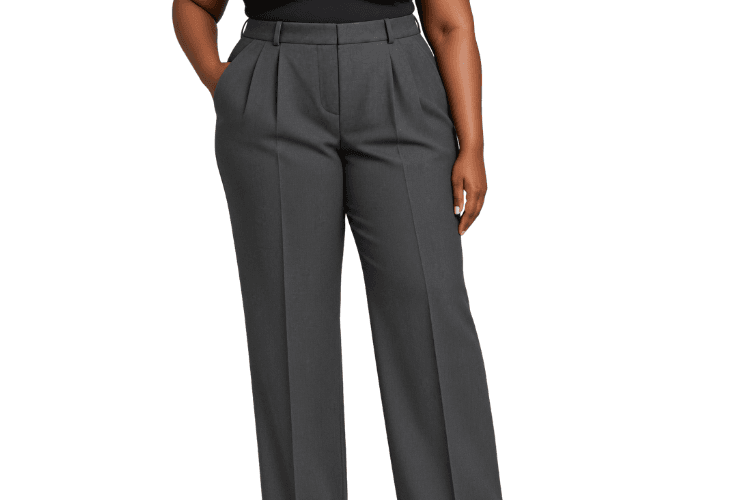
Lay the trousers flat with the front facing upward. The front shows the waistband, closure, fly, shaping, pockets, and leg line.
Waistband and closure
In tailored trousers, the waistband is the upper band that holds the garment at the waist or upper hip. Depending on the style, it may be straight, softly curved, or contoured. Most tailored waistbands include inner support so the band stays smooth and keeps its shape.
At center front, the waistband usually extends beyond the fly to accommodate a button, trouser hook, hook-and-bar, or other closure. Belt loops may be added for a belt or as a traditional tailored detail.
The waistband is covered in depth in The Waistband: The Anchor of a Women’s Tailored Trouser.
Fly front
The fly is the center-front opening. From the outside, you may see the waistband closure and a curved line of fly topstitching.
Inside the fly are the zipper, a fly extension or facing, and a fly shield that sits between the zipper and the body. The lower end of the fly receives reinforcement because it is a point of frequent stress.
The fly construction will be covered separately in The Fly Front: The Hidden Structure Behind a Tailored Trouser Zipper.
Pleats and darts
Pleats and darts create shape at the waist and upper hip.
Adding pleats gives controlled fullness. One or two front pleats can provide room through the tummy, hip, and upper thigh while keeping the waist fitted. Darts remove fabric at the waist so the trouser can curve over the body below.
Some trousers use a flat front with darts. Others use pleats, or a combination of pleats and darts. The choice affects silhouette, comfort, and the amount of ease through the upper body.
Pockets
Slanted front pockets are common on tailored trousers. The visible opening is only one part of the pocket; the pocket bag sits inside the garment and needs to lie smoothly without pulling open.
Tailored trousers may also use on-seam pockets, front welt pockets, back welt pockets, or no pockets at all. Pocket placement, opening angle, and pocket-bag construction can affect the way the trouser front lies over the hip and tummy.
Back View
The back of a tailored trouser includes the back waistband, center-back seam, back darts, seat area, and optional back pockets.
Center-back seam and back darts
The center-back seam shapes the trousers through the waist and seat. It is also a useful location for future waist adjustments when enough seam allowance is available.
Back darts remove fabric at the waist and allow the trouser to follow the curve of the seat. A trouser may have one or two darts on each side, depending on the design and the wearer’s shape.
Back rise and seat
From there, the back rise runs from the waistband at center back down through the crotch. It must accommodate the body while standing, sitting, and walking.
Beyond a flat check, trouser fitting should be checked in motion. Sit down, walk a few steps, bend slightly, and notice whether the waistband remains in place and whether the fabric pulls across the seat or rides up at center back.
Back pockets
A tailored trouser may have no back pockets, a single welt pocket, two welt pockets, or decorative welts. Welt pockets are narrow, carefully finished openings that require precise marking, stitching, clipping, turning, and pressing.
Their placement affects the visual balance of the back of the garment.
The Fit Map
The fit map identifies the areas that need to work together in a finished trouser:
| Waist | Tummy | Crotch depth | Knee |
| High hip | Seat | Crotch length | Calf |
| Full hip | Front rise | Upper thigh | Hem width |
A pattern may match a woman’s hip measurement and still need adjustments for tummy room, thigh circumference, rise length, seat shape, waist size, or posture. A test garment gives you a chance to assess these areas before cutting expensive fabric.
Inside the Trouser
The inside of womens tailored trousers contains the support and finishing that help the garment wear well. Making Perfect Pants
Interfacing supports areas such as the waistband, fly, pocket openings, and welt pockets.
Pocket bags form the hidden interior of the pockets and may be anchored into the waistband or front seam to prevent sagging.
Fly shield covers the zipper on the inside.
Lining may cover the upper leg, extend to the knee, or line the full trouser. It can improve comfort, drape, durability, and ease over hosiery.
Seam finishes control fraying and should suit both the fabric and the planned level of wear.
Reinforcement at stress points may include bar tacks, stay tape, or extra stitching.
Threads notes that trouser lining can improve comfort, durability, opacity, and drape, especially in fabrics such as wool.
The interior details will be covered in Inside a Tailored Trouser: Lining, Interfacing, and Beautiful Finishing.
Leg and Hem
The leg may be straight, tapered, wide, bootcut, or fuller through the The shape of a tailored trousers depends on the relationship between the grainline, side seam, inseam, and hem width.hem.
Many tailored trousers include a pressed crease down the center front and center back of each leg. The crease follows the grainline and contributes to the clean vertical line associated with dress slacks.
The hem may be plain, cuffed, blind stitched, machine stitched, faced, or reinforced with hem tape. Hem depth and finish affect the weight and drape of the trouser leg.
Before You Begin
Use this checklist before you begin a pair of tailored trousers:
Does the pattern include the style features you want: pleats, darts, a fly front, pockets, lining, cuffs, or belt loops?
Is your fabric suitable for the style, season, and amount of structure you want?
Do you have lining, pocketing, interfacing, closures, and thread that suit the fabric?
Have you selected the pattern size from your body measurements rather than your ready-to-wear size?
Do you know where you commonly need fitting changes: tummy, hip, seat, thigh, waist, or rise?
Will you sew a test garment before cutting your final fabric?
Have you allowed time for pressing during construction?
Have you decided whether you need room for future waist, length, or seat adjustments?
The next articles in the Tailored Trouser Series will cover: Part 2 The Waistband: The Anchor of a Women’s Tailored Trouser