Sewing should be an activity you look forward to. Yet a long session at the machine, cutting table or ironing board can leave your back and shoulders uncomfortable. The arrangement of your workspace and the time you spend in one position may contribute to that discomfort, although back pain can also have causes unrelated to sewing.
Look at the way you work
Leaning forward to see
Poor lighting or a machine positioned too far away can encourage you to lean toward the needle. Bring the work within a comfortable viewing distance and direct task lighting onto the stitching area without creating glare.
Machine and chair height
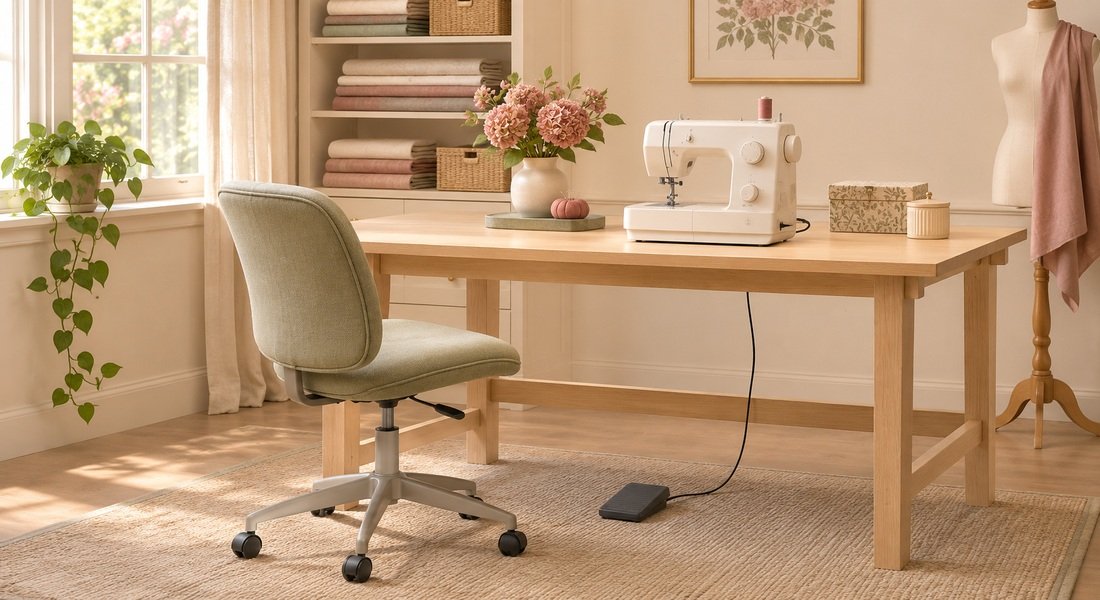
The important height is the actual sewing surface, not simply the table top. Sit with your shoulders relaxed, elbows near your sides and forearms in a comfortable working position. Adjust the chair or work surface to suit your body. If raising the chair leaves your feet unsupported, provide a stable footrest where appropriate.
Foot pedal placement
Position the pedal where you can operate it without reaching or twisting. Support the other foot and leave enough space for both legs. Check that cables and supports do not interfere with safe pedal use.
Staying in one position
Even a comfortable setup can become tiring when you remain still. Alternate tasks and take short movement breaks before discomfort builds. A reminder every 20 to 30 minutes can be a useful starting point, adjusted to your needs.
Check the other workstations
Cutting and pressing can involve bending, reaching and standing for long periods. A cutting surface should allow you to work without prolonged bending or excessive shoulder elevation. Position the pressing surface so you can control the iron comfortably. Keep frequently used tools within easy reach.
Make one adjustment at a time
| Observation | Adjustment to try |
|---|---|
| Leaning close to the needle | Improve task lighting and work positioning |
| Raised shoulders | Adjust the chair or sewing surface |
| Twisting to reach the pedal | Reposition the pedal and support both feet |
| Discomfort during cutting | Adjust working height and bring the fabric closer |
| Stiffness after sitting | Alternate tasks and take brief movement breaks |
Keep a short record of the task, how long you worked and what you noticed. This can help you identify patterns and discuss persistent symptoms with a healthcare professional. It is not a medical diagnosis.
When to seek medical advice
Do not sew through worsening pain. Seek medical advice if pain is persistent, recurrent, severe or interferes with daily activities. New loss of bladder or bowel control, numbness around the groin, or significant new leg weakness warrants emergency medical assessment.
A resource for your sewing space
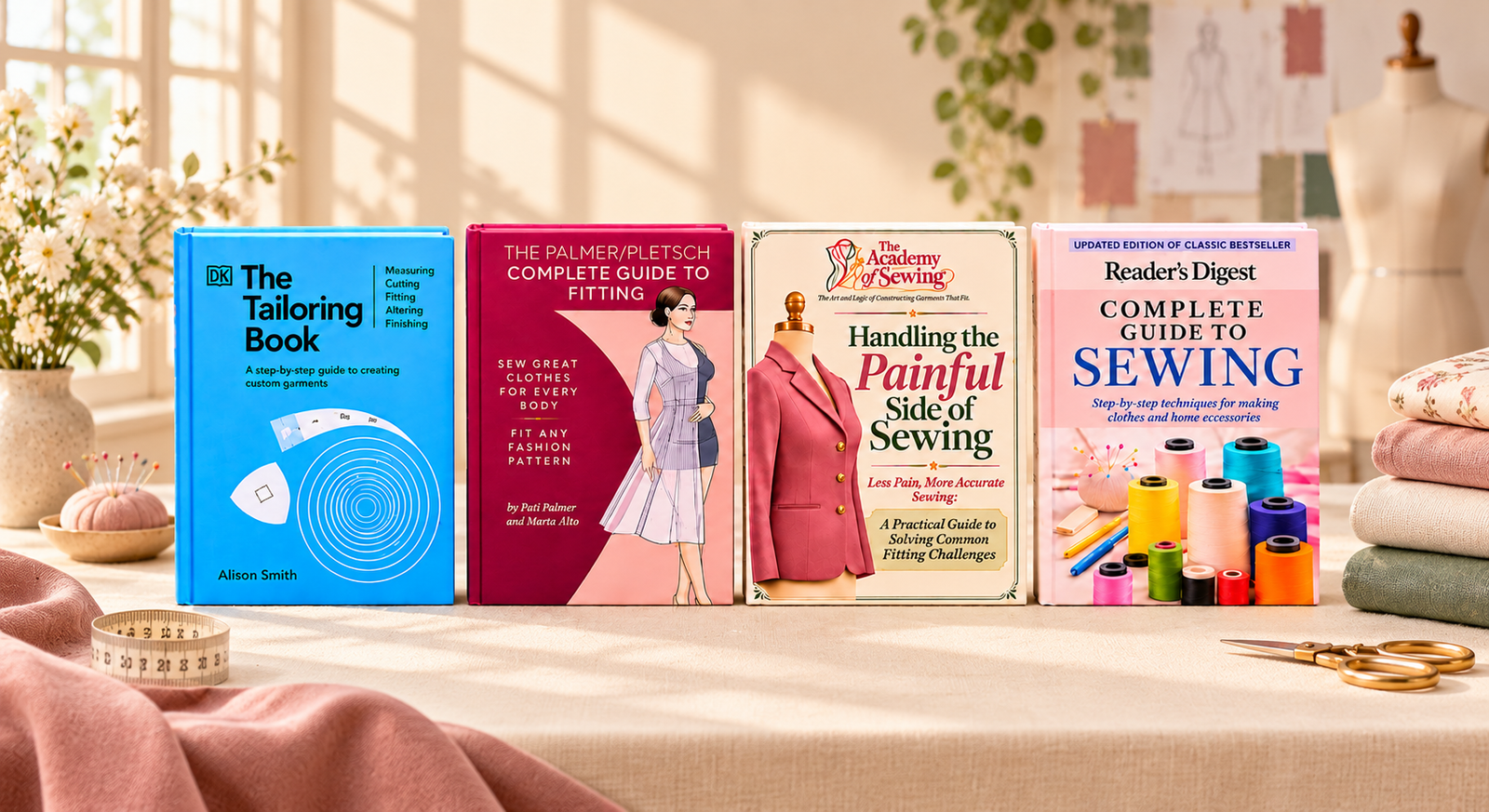
Handling the Painful Side of Sewing is an Academy resource for exploring practical ways to organize sewing tasks and your workspace around comfort. The Find My Sewing Pain Pattern resource, when available, can support reflection on work habits; it does not diagnose a medical condition.
The goal is to create a workspace that supports the way you sew, rather than asking your body to adapt to every piece of equipment.
Reference: OSHA, Sewing Station Design, https://www.osha.gov/etools/sewing/station-design
Back to The Sewing Journal