News & Events
What Is A Lapped Zipper?
No Comments
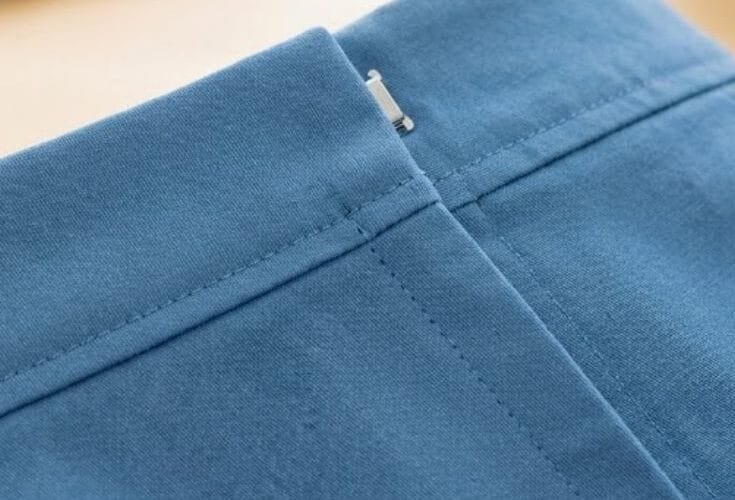
A lapped zipper is one of the most common zipper closures you’ll come across in skirts, dresses, and pants, but the name alone doesn’t tell you much. In this one, we’re covering what it actually is, where it shows up on a garment, how it compares to a fly zipper, and why you’d choose one over the other. Once you’ve got that down, the next one walks through sewing it in step by step.
What Is a Lapped Zipper
A lapped zipper is a zipper closure where one side of the fabric overlaps the other, so only one line of stitching shows on the outside of the garment. The zipper itself is sewn in with two rows of stitching, but one row gets tucked underneath a fold of fabric, hiding it from view. That’s where the name comes from. The fabric “laps” over one side of the zipper.
If you look at a skirt with a lapped zipper from the outside, you’ll usually see a single vertical line of stitching running down the seam, close to the fold. The other side is sewn flat, right up against the zipper teeth, but it stays hidden underneath that little overlap of fabric. It’s a clean, tailored look, and it’s sturdy too, since the fold gives the zipper some extra coverage and protection.
This is different from a centered zipper, where both rows of stitching are visible and evenly spaced on either side. With a lapped zipper, you only see the one line, which is part of why it’s such a popular choice when you want a closure that looks polished but doesn’t draw attention to itself.
What a Lapped Zipper Is Used For
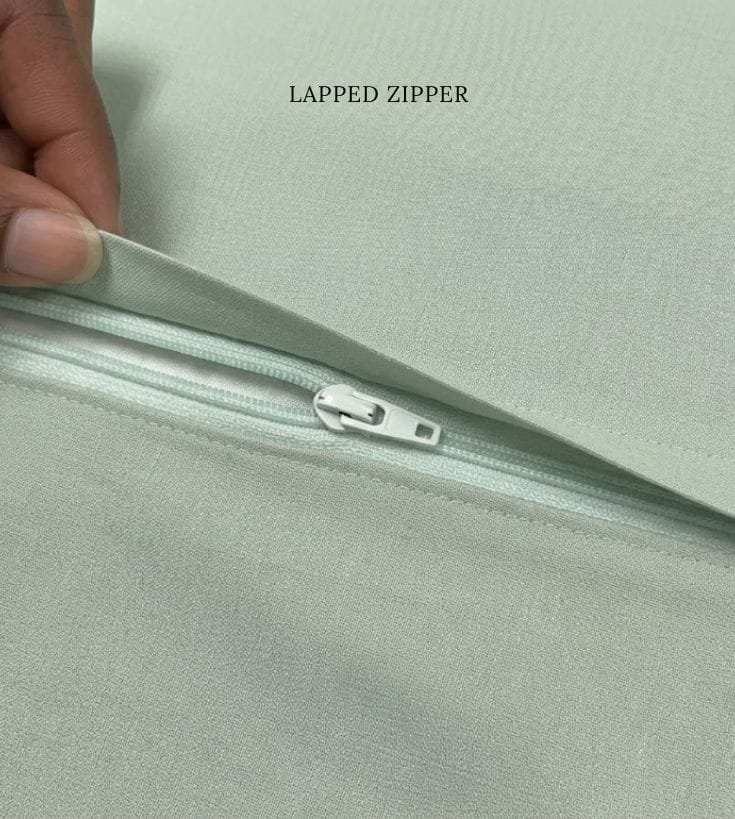
You’ll find lapped zippers most often on side seams, usually on skirts and dresses. It’s the go-to closure when you want something secure but understated, since that single visible line of stitching blends right into the seam instead of standing out.
It shows up on pants too, though less often on the side seam these days. Some waistband-and-facing combinations use a lapped zipper at the side or back, especially on styles where a fly front doesn’t make sense, like a straight-leg pant with no center seam to work with.
Basically, anywhere you need a zipper closure that looks intentional rather than functional, a lapped zipper is a strong choice. It’s not flashy, it’s just clean.
How It Compares to a Fly Zipper
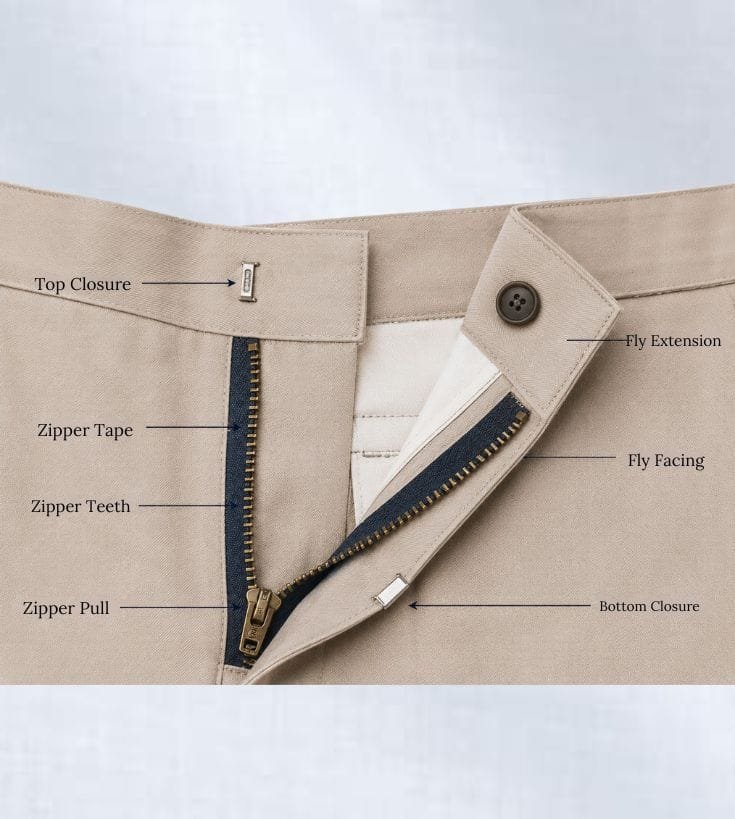
A fly zipper is really just a specialized version of the lapped zipper. Same basic idea, one side overlaps the other so only a single line of stitching shows, but the fly zipper is built for a very specific spot: the front of pants.
Because that area takes a lot of stress from sitting, bending, and moving around, a fly zipper usually has some extra reinforcement built in, like a fly shield or extra topstitching, that you don’t typically see on a side-seam lapped zipper. The shape is different too. A fly zipper follows a curved line down the front, while a side-seam lapped zipper runs straight.
So they’re related, but not interchangeable. If you’re inserting a zipper into a skirt or dress side seam, you’re using the lapped method. If you’re doing a pants front, you’re using the fly method, which borrows the same lapping principle but adapts it for a different job.
Why Choose a Lapped Zipper Over a Fly Zipper
Since a fly zipper is really just a variation on the lapped method, it’s worth knowing when you’d reach for one over the other. A fly zipper makes sense when you need that extra reinforcement, like on a pants front where the fabric takes a lot of stress from sitting and moving.
But if you’re working on a skirt, dress, or any side-seam closure, a lapped zipper is the simpler choice. It gives you that same clean, single-line look without the extra shield, topstitching, or curved shape a fly zipper needs. Less bulk, less construction, and it’s a better match for garments that don’t need that kind of reinforcement in the first place.
Now that you know what a lapped zipper actually is, where it’s used, how it compares to a fly zipper, and why you’d choose one over the other, you’ve got the foundation down. Next up, we’ll walk through the actual process of sewing one in, step by step, so you can put all of this into practice.
Not sure where your biggest sewing struggle is coming from? Take the Find My Sewing Pain Pattern quiz to find out, and get a personalized starting point for fixing it.